
Questions deserve clear answers.
Everything a qualified researcher should know about EMBER’s release rule, sourcing, manufacturing, testing, documentation, ordering, fulfillment and support. Where something is not yet confirmed, this page says so rather than answering around it.
Release & lot documentation
How a product becomes available for purchase, and what its record carries when it does.
Yes. Every product available for purchase is linked to a current COA for the exact lot offered for sale.
The product stays in documentation review and becomes available once that review is complete.
Yes. The published COA corresponds to the active lot offered for sale.
No. Each released lot must have its own current documentation.
The lot’s record goes under review, and the lot returns to availability only once the discrepancy is resolved.
EMBER’s current release standard requires one complete lot-specific COA before release. Additional testing and verification programs may be added as the quality system expands.
Manufacturing & origin
EMBER publishes what it can substantiate and keeps supplier and facility relationships confidential. Both of those are stated plainly below.
EMBER does not currently publish a Made in the USA claim, so the accurate answer today is that it is not stated. The claim appears once its supporting evidence has been reviewed internally. EMBER does not publish confidential manufacturer or facility details in any case.
No. The claim refers to product manufacturing—not merely labeling, packaging, warehousing, or domestic fulfillment. EMBER will not publish the claim on the strength of domestic warehousing or shipping alone, and that limit is written into its published standards.
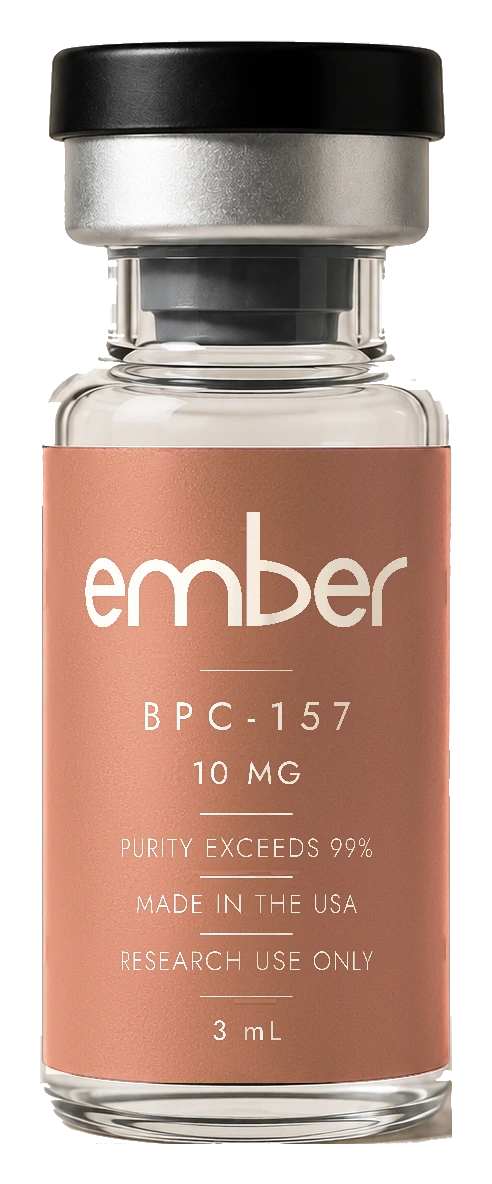
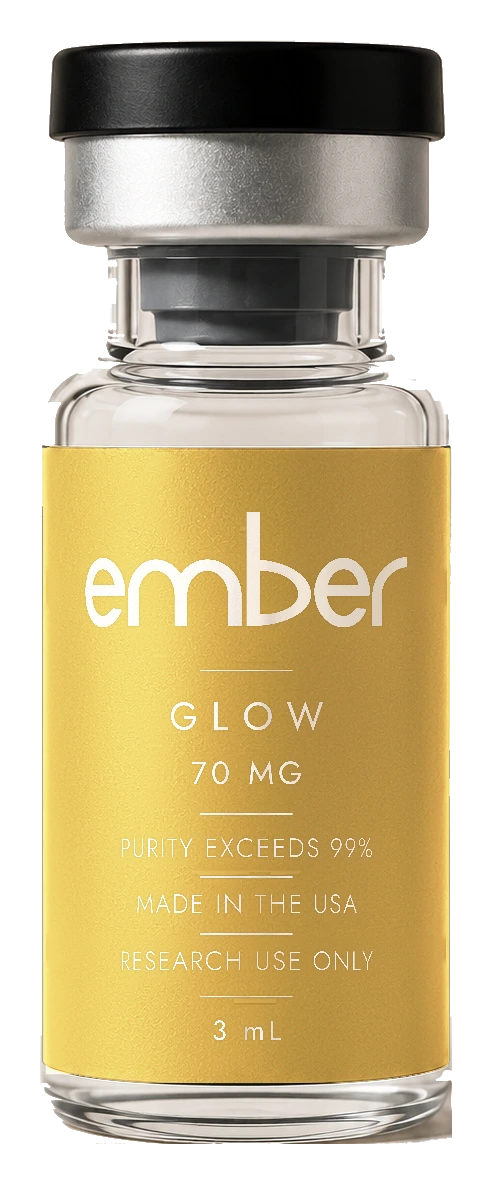
It means domestic product manufacturing, and it is not currently published. The phrase appears on the approved vial artwork, but artwork is not substantiation, so the site does not repeat it as its own claim until the supporting records have been reviewed. When it is published it will mean the product itself was manufactured in the United States—not that it was labeled, packaged, warehoused or shipped here.
EMBER keeps proprietary supplier and facility relationships confidential. The underlying substantiation is maintained internally, while customer-facing records focus on the product, lot, analyses, and documentation status. Confidentiality does not replace evidence: a claim that cannot be substantiated internally is withheld from the site, whether or not its details are confidential.
EMBER does not currently publish a Tested in the USA claim, so it is not stated today. No product in the current catalogue has a published analysis, and the documentation page shows the real state of each one. Laboratory identity is not published in any case.
EMBER does not currently publish a fulfillment-location claim. What is confirmed is that EMBER ships within the United States only, and that standard domestic shipping is free. Fulfillment operator and location are not published.
A claim is reviewed against internal substantiation before it is published, and it stays off the site until that review is complete. The evidence itself—attestations, production records and partner detail—is held internally and is not published. What you can check on the site is which claims EMBER is currently willing to make, and the site withholds the ones it cannot yet support.
Yes, which is why origin status is held per product rather than as a single site-wide switch. A claim can be published for one product and withheld for another without either being misdescribed. If origin changes between lots, the status for the affected product is what changes.
Testing & documentation
A document belongs to one product and one lot. Everything in this section follows from that.
EMBER requires a current lot-specific certificate of analysis for every released lot, and that requirement is enforced in code. What is not yet confirmed in writing is the wider testing programme, and no lot in the current catalogue has been released — so an assurance about every batch would not be supportable today. The documentation page shows the real state of every product rather than a general promise.
The analyses that can appear on a record are identity, purity, assay or content, water content, residual solvents, endotoxin, sterility, bioburden, appearance, pH and container-closure testing, and the glossary on the testing page defines the main ones in plain language. Listing them describes what an analysis evaluates in general — it is not a statement that each one is run on each product. Each product has a configured panel stating which analyses both reports must carry, and the tests actually performed appear on the lot record once the reports are issued.
Yes — that is how the records are built: one certificate, one product, one lot, and the system cannot print a result without a lot to attach it to. No certificate of analysis has been issued for a current batch yet, so there is none to show today. A generic document is never presented as batch-specific, and one document is never reused across unrelated lots.
Use the lot number printed on the vial. Every vial states its compound, strength, lot and research-use designation, and the documentation lookup lets you search by lot number or filter by product. If a lot number on a vial does not return a record, email support and it will be traced against the batch it was released from.
Because its current lot-specific COA has not been received, or has been received and has not completed review. The product remains unavailable until it has. A pending record never means a result exists and is being withheld.
Where a source certificate is available for release, a download link appears on the lot record — no record currently carries one, because no certificate has been issued yet. Whether every issued certificate will be published in full has not been confirmed, so EMBER is not promising it in advance. What is fixed is that the certificate is linked to the lot record it describes.
No. A figure appears as the issuing laboratory reported it, and EMBER does not round, restate or summarise a result in place of its document. This is one of the commitments on the Standards page, and the site is built so a purity or identity value cannot be entered without the document that carries it.
Identity asks whether the material is the compound it claims to be. Purity asks what proportion of the material is that compound rather than related substances. Potency measures how much active material is present, sterility asks whether viable microorganisms are present, and endotoxin testing looks for bacterial endotoxins. Each answers a different question, and a product tested for one has not thereby been tested for the others.
Because the analyses that are meaningful differ by material and by format. A lyophilized peptide and a bacteriostatic water product are not evaluated the same way, and running an inapplicable test would produce a number that does not mean anything. Each product is configured with a testing panel that states which analyses both reports must carry, and the release gate refuses the lot if either report is missing one of them.
Product quality & release
What EMBER checks before a product is released, and what happens when something does not line up.
That wording appears on the approved vial artwork, and EMBER does not publish it as a figure on this site. No purity value is shown anywhere on the site without an issued report behind it, and no product currently has one. A released lot carries two purity results — one per report — and neither is averaged, rounded or replaced by the other. Where the artwork and an issued report ever differ, the report governs.
No, and the difference matters. Identity confirms the material is the compound named on the label; purity describes what proportion of the material is that compound rather than related substances. A material can be correctly identified and still vary in purity, so a record carries the two results separately.
The certificate of analysis is reviewed against the product it describes — compound, strength and lot must match the vial — and against the testing panel configured for that product before the certificate arrived. Release itself is a supervisor action. This is EMBER’s operating standard rather than an external validation process, and the Standards page says so plainly instead of implying an audit that is not in place.
The product is not released against that documentation. A report that cannot be tied to the exact product, strength, lot and sample in front of it is not published as though it can, and a disagreement between the two reports holds the lot rather than being resolved by preferring one of them. If you find a mismatch after delivery, email support with the lot number and it will be traced.
A lot is assigned to a finished batch before any sample is drawn, so the certificate has something specific to attach to. Every vial carries its lot number on the label. No product in the current catalogue has a lot assigned yet, which is why records read Not yet released rather than showing a placeholder.
Storage and handling requirements vary by compound and are recorded per product rather than as one universal claim. The confirmed conditions for a product appear on its page once they are recorded, and are followed during fulfillment. Product-specific storage guidance is still being finalised across the catalogue and is not stated until it is.
A mismatch between a product and its record, or a concern raised about a lot, places the lot on hold and opens a documented case; a known discrepancy is disclosed rather than hidden; and a superseded lot is archived rather than deleted so older material can still be matched to its records. Resolving a hold does not by itself return a product to sale — a supervisor has to release it again, and that is recorded separately. The customer notification and remediation process beyond that has not been finalised in writing yet, so EMBER is not describing one here. Report anything you have observed to support with the lot number.
Ordering & fulfillment
Who may buy, what shipping costs, and what happens after an order is placed.
Buyers who are qualified and authorised to purchase and handle research materials, and who are of legal age in their jurisdiction. Entering the shop requires confirming a short research-use acknowledgement, and adding an item asks you to confirm it again before checkout. EMBER may request evidence of qualification and may refuse or cancel an order.
Yes. Standard domestic shipping is free, and that is a confirmed commercial decision rather than a promotional rate. There is no minimum order value and no expedited option is offered at this time. The figure is calculated by EMBER at checkout and shown before payment.
EMBER does not publish a fulfillment location, and does not publish the fulfillment operator. What is confirmed is that EMBER ships within the United States only, and that standard domestic shipping is free.
Orders are packed so the storage and handling requirements recorded for each product are maintained in transit. Because those product-specific requirements are still being finalised across the catalogue, EMBER is not describing a specific packing method or cold-chain arrangement yet. If a shipment has a handling requirement you need confirmed before ordering, ask support.
Yes. Every vial states its compound, strength, lot and research-use designation, so material in hand can always be matched back to its record. That lot number is what the documentation lookup searches on.
Yes. An order cannot be marked shipped without a tracking number, so a shipment notification always carries one, with a carrier link where the carrier provides one. You can also re-open the order at any time using the link in your confirmation email, which shows its current status as EMBER updates it. Keep that email — it is how the order is opened again.
Email support with your order number and the compound, strength and lot printed on the vial you received. That is enough to trace what was picked against what was ordered. Do not use material that does not match your order.
Email support with your order number and photographs of the packaging and vials before discarding anything. The packaging is part of the record of what happened in transit. Do not use material from a compromised vial.
Email support directly, or use the support form which lets you attach an order number, a product and a lot number to the request. Including the order number in the first message is the single thing that most speeds up a reply, because it lets support open the order snapshot immediately.
Research-use requirements
What these products are for, and what EMBER cannot help you with.
No. All products are supplied strictly for laboratory research use, and are not intended for human or veterinary use or for the diagnosis, treatment, cure or prevention of any disease. They may not be used in or on humans or animals, and reselling or transferring material for those uses is prohibited.
No. EMBER does not provide dosing guidance, administration instructions or protocols, and nothing on this site should be read as such. This is not a matter of policy caution — supplying that guidance would contradict the research-use basis on which the material is offered.
No. Support can answer questions about a product record, a lot, a document, a specification, availability or an order. It cannot advise on medical matters, dosing or human or veterinary use, and will say so rather than answering partially.
Someone authorised to purchase and handle research materials, of legal age in their jurisdiction, working in a setting appropriate to the material. EMBER may request evidence of that qualification. The acknowledgement at entry asks you to confirm it before any product information is shown.
Because these materials are supplied for laboratory research and carry no human-use instructions, the buyer's competence to handle them is part of supplying them responsibly. The acknowledgement records that confirmation against your session and is quoted back at checkout. It is a real gate rather than a banner.
No. Products are not intended for veterinary use any more than for human use. The research-use designation covers both, and it is printed on every vial.
Handling, storing and disposing of material safely and in line with institutional, local, state and federal requirements, and complying with all laws applicable where you are. Buyers are also responsible for confirming that their intended research use is lawful in their jurisdiction. EMBER may refuse or cancel an order where a use appears inconsistent with the policy.
Support & accountability
How to reach a person, and what happens to what you tell them.
Email support with the product and the lot number printed on the vial, or use the support form and select Product documentation as the request type. If reports have been issued for that lot you will be sent them; if they have not, you will be told that plainly rather than sent something generic in their place.
By email at the support address, or through the support form, which routes to the same place. The same address appears on your order confirmation, so a reply about an order reaches the team that has the order in front of them.
The compound and strength, the lot number from the vial, and your order number if the request concerns something you have received. Those three things are enough to open the exact record. Without a lot number a request can usually still be answered, but it will take a round trip to identify which batch you have.
Yes, and lot-specific questions are the ones the support workflow is built around — the form carries a lot-number field for exactly this. A question about a lot is answered against that lot's record rather than with a general statement about the product.
A concern about a certificate is checked against the lot record it refers to, and a discrepancy that is confirmed is disclosed rather than quietly corrected. Records are preserved rather than deleted, including superseded lots and their certificates, so what a record said at the time remains traceable. The formal escalation process beyond the hold is still being finalised and is not described here as though it were in place.
Email support with your order number and the compound, strength and lot printed on the vial you received. Photographs of the label help. Do not use material that does not match what you ordered.
Where a source certificate exists and can be released, yes — and where it cannot, you will be told that rather than sent a summary in its place. No source certificate has been issued for any current batch yet, so none can be provided today.
If an answer on this page is unclear, incomplete, or does not match what you received, say so. A question about a specific lot is answered against that lot's record.
support@emberscientific.com Open a support requestProducts offered by EMBER are intended strictly for laboratory research use only. They are not intended for human or veterinary use, or for the diagnosis, treatment, cure or prevention of any disease.
Buyers must be qualified to purchase and handle research materials, and must use all products in accordance with applicable laws and regulations.